The 21st Century? Study the 20th Century

Want to understand the 21st century? Study the 20th century.

If we look at history, we see how it informs today in a profound way. For instance, after centuries of rule by the Czars, the common Russian people, impoverished and with valid grievances,were open to the socialist message of Lenin and Trotsky. The resulting Bolshevik Revolution led to civil war and eventually communist rule. This upheaval allowed a strong man to arise: Joseph Stalin.

Under Stalin’s iron rule, the government encroached on every area of life. Property and businesses were seized. The government tried to socially engineer economic outcomes, and that failed miserably on every hand. Millions of Russians literally starved to death.

Multiple millions died in the gulags.

As the years unfolded, the Russian people suffered in unimaginable ways. 750,000 were executed in The Great Purge. The Great Purge was followed by the horrors of World War II.

Stalin went down in history as one of the most brutal dictators in history. He is likely responsible for more deaths than anyone else in human history – even more than Hitler. Oh, and by the way, Stalin was highly intelligent with a charismatic personality. He had a personal library of 20,000 books – most of which contained his personal notes as he had read them. He was known to read several books per week. He knew exactly what he was doing.

A history lesson is in order with the rising popularity of Socialism in America – especially among our young. The grievances and divisions that give rise to Socialism are not solved by it. Socialism has never in world history delivered what it promises. It will not work this time either.

Not only does Socialism never deliver on its promises, but it has far worse consequences than disappointment. Socialism always ends with poverty, despondency, and, eventually dictatorship where the government controls everything.

Communist Russia broke apart when the Iron Curtain fell. Out of that chaos, freedom did not last long. As the 20th century came to an end, a new Czar was rising, Vladimir Putin. The rise of Socialism had not delivered on a single promise in 100 years of Russian history.

I fear too many people are easily manipulated by social media. Too many people do not know basic history – to our nation’s peril.

The Clear and Present Danger of Progressive Christianity

While preaching in Ephesians 4 a few Sundays back I made the statement that Progressive Christianity is a clear and present danger to the church. I thought I would use this space to unpack that statement so that all of us can better understand and earnestly contend for the faith as scripture requires. Originally, I intended to write two posts – one defining Progressive Christianity and another sharing its danger. Really, I can’t deal with one without the other! Please let me share a brief, concise look at Progressive Christianity and why it is so dangerous for the church today.

  1. PROGRESSIVE CHRISTIANITY REJECTS THE AUTHORITY OF SCRIPTURE.

This is very subtle – at first. Statements are made that emphasize “We need to mainly look at what Jesus said about issues.” Then we hear, “Well, Jesus never even talked about that issue.” Sounds good on the surface. After all, we have Matthew, Mark, Luke, and John in our Bibles. What Jesus said about an issue certainly matters greatly. However, Jesus’ words are not the only inspired words in our Bible. EVERY word of the Bible is God’s Word. It is an old trick from liberal theologians to seek to elevate the words of Jesus above all the other words of Scripture. It lays the foundation for saying the rest of Scripture isn’t binding. “The Apostle Paul said that, not Jesus” is a statement that is often made, meaning the Pauline epistles are not scripture in the same way as the words of Jesus are. The end result: we don’t have to go by those words if we don’t like them. Ultimately, this “new, modern” way to look at the Bible undermines belief in the inspiration of the Bible, the inerrancy of the Bible, and the authority of the Bible.

2. PROGRESSIVE CHRISTIANITY REINTERPRETS KEY BIBLICAL TEXTS AND DOCTRINES.

For instance, it is now common to see the argument made that the clear words about the sinfulness of homosexuality in Romans 1 do not apply to us today. “Those were abusive same sex relationships. They were not the beautiful relationships like we have today” is one such argument. The crystal clear requirement that pastors/elders are to only be men in 1 Timothy 2-3? “Oh, that is just the Apostle Paul addressing a cultural problem in his day. Jesus never talked about women pastors.” Even “the gospel” itself (clearly defined in 1 Corinthians 15:1-3) is not immune. We see people adding to the simple, saving gospel of Christ as well as “viewing the gospel through new eyes.” As a result, the gospel is no longer JUST Jesus’ incarnation, sinless life, crucifixion, and resurrection. It is Jesus’ incarnation, sinless life, crucifixion, resurrection PLUS social justice issues, climate issues, etc.

3. PROGRESSIVE CHRISTIANITY EMPHASIZES SOCIAL JUSTICE TO THE NEAR EXCLUSION OF OTHER BIBLICAL MORAL ISSUES.

Let me be clear at this point: Christians should absolutely seek racial reconciliation and justice for the oppressed. Christians should absolutely stand for the dignity and value of every human life. Those are clear, Biblical positions. However, proponents of Progressive Christianity constantly talk about social justice issues, but remain silent about the evil of abortion, the radical LGBTQ+ ideology in our education system, and lawlessness in our streets. Scripture speaks to those issues just as clearly as it does the social justice issues. For instance, Progressive Christianity constantly calls out fellow believers for not doing enough about social justice issues, but waffles when it comes to abortion. “That is just a complicated issue….”

4. PROGRESSIVE CHRISTIANITY ULTIMATELY SEEKS THE APPROVAL OF THE WORLD INSTEAD OF THE APPROVAL OF THE LORD.

Once the authority of scripture is no longer the guiding principle, the church is unmoored from the anchor of God’s Word. How will church doctrine and practice be decided if not by the clear, authoritative words of Scripture? Inevitably, the answer will be…”Whatever is acceptable to the culture.” It may not start there, but it will inevitably end there. Compromise of doctrine and moral standards will happen in efforts to become acceptable to the world. Progressive Christianity starts out as “We will show you that we aren’t like these other, judgmental Christians” but it NEVER ends there. There is always another bridge to cross. There is always another doctrine that offends.

5. PROGRESSIVE CHRISTIANITY INEVITABLY LEADS TO LEAVING THE FAITH.

Once the church’s beliefs and practices are no longer determined by Scripture, one biblical standard goes by the wayside followed by another and another and another. There is no end in sight. One look no further than the mainline denominations in Amercia today. They have some leaders who not only openly embrace the LGBTQ+ lifestyle, but also deny the reality of hell, the bodily resurrection, and the literal second coming of Christ. They no longer believe that personal faith in Jesus Christ is necessary for salvation. Some actually believe that salvation can be found in most any faith. These leaders and those who follow them have left the faith once delivered to the saints (Jude 3).

Speaking of the mainline denominations, let me make a couple of observations. The argument is that the church must change what we believe and teach in order to be acceptable to new generations. If moving away from what the church has historically believed is the answer to declining church attendance, the mainline denominations should be thriving. They are not thriving. They are dying.

The issue for the church today isn’t really even declining chruch attendance. The issue for the church today is FAITHFULNESS. Faithfulness to the Lord and His Word. Faithfulness in living the Christian life in this confused world. Faithfulness to the gospel and the Great Commission in this broken, hurting world. The chuch must start there. How do we take these Biblical convictions and live them out faithfully in the culture without compromise?

Progressive Christianity starts with a different question: How can we change in order to become more acceptable to the culture?

I close with the words of the great English Pastor Charles Haddon Spurgeon. He stood against downgrade in his own day. These are Spurgeon’s words in 1887 when the Downgrade Controversy was ramping up. He stood tall for truth and righteousness in the church when almost everyone else would not – even among the Baptists of that time!

“A new religion has been initiated, which is no more Christianity than chalk is cheese. And, this religion, being destitute of moral honesty, palms itself off as the old faith with slight improvements, and on this plea, usurps pulpits which were erected for Gospel preaching. The atonement is scouted, the inspiration of Scripture is denied, the Holy Spirit is degraded into an influence, the punishment of sin has turned into fiction and the resurrection into a myth, and yet these enemies of our faith expect us to call them brethren and maintain a confederacy with them.

We have before us, the wretched spectacle of professorly Orthodox Christians publicly avowing their union with those who deny the faith and scarcely concealing their contempt for those who cannot be guilty of such gross disloyalty to Christ. To be very plain, we are unable to call these things Christian unions. They begin to look like confederacies and evil. Before the face of God, we fear that they wear no other respect. In our inmost heart, this is a sad truth from which we cannot break away.”

The Truth in Love Space

The church is to operate in the “truth in love” space. Scripture is clear in this regard….

“but speaking the truth in love, we are to grow up in all aspects into Him who is the head, even Christ,” (Ephesians 4:15, NASB95)

What does this look like? What are the challenges in today’s world? Continue reading as we examine this vitally important issue in more detail.

The first issue is our SOURCE of truth. We live in an age where increasingly people say “I don’t believe anything anymore.” People have been lied to by their political leaders too many tines. People have been lied to by the media. People have seen lies go around the world in seconds on social media. With AI, you can no longer believe what you see or hear anymore.  So, what do we do?  Is there truth to be found anywhere? Our culture offers only one alternative: each individual determines the truth. The individual is god! This folly leads to chaos, and we see this unfolding in our country today. We see moral chaos and, increasingly, chaos in our streets.

    The biblical, Christian worldview is clear about our source of truth. JESUS EMBODIES the truth (John 1:14, 14:6). The BIBLE REVEALS the truth (2 Timothy 3:16), and the church PROCLAIMS the truth (1 Timothy 3:15). The people of God live from the standpoint of revealed truth. If truth is a constant, moving target, then we have no basis to be bold about anything. Everything starts with our source of truth.

    BOTH truth and love are ESSENTIAL. There are voices in our culture today who only want to emphasize God’s love. They use the famous Biblical truth “God is Love” like a trump card over everything else. You aren’t supposed to name sin or call for repentance because, after all, God is love. That position is a lie because it is love without truth. At the other extreme are those who are clear about the truth, but they don’t really care about people. They use the truth as a cruel hammer. That is truth without love. The Biblical way is BOTH. Speak the truth and only the truth. When you speak the truth, make sure it comes from a heart of love – love for the Lord and love for people. Truth and love are not mutually exclusive. They go together.

    It’s truth IN love. After I recently preached on this text, a member of my church came up to me said, “Pastor, it’s very important to be clear. It’s not truth AND love. It’s truth IN love. There is a difference.” They are exactly right. It’s always truth IN love. It’s not truth AND love. What’s the difference? If it’s truth AND love, then I am obligated to speak the truth and I am obligated to love. However, truth IN love means that the truth I share must be wrapped up in love – like the picture at the top of this post. Love must permeate truth. Speaking truth must be MOTIVATED by love and DONE from a heart of love in the MOST loving way possible.

    The truth is OFFENSIVE to some. There is no getting around it. There are some truths that, no matter how kindly and winsomely you say them, will offend some people. For instance, to simply state the Bible’s simple, clear position on marriage and sexuality will bring howls of “bigotry” and “God is love.” We should make every effort not to be offensive. We should constantly search our hearts to make sure our heart burns from our love of God and is tender with love for people. However, if the truth offends, so be it. We must stand on the truth. The alternative is to lie to people. Just know that if we refuse to lie to people, some people will be offended.

    The “truth in love” space is where Jesus operates. I love the famous story in John 8 where the scribes and Pharisees bring a woman to Jesus who has been caught in the very act of adultery….

    “Early in the morning He came again into the temple, and all the people were coming to Him; and He sat down and began to teach them. The scribes and the Pharisees brought a woman caught in adultery, and having set her in the center of the court, they said to Him, “Teacher, this woman has been caught in adultery, in the very act. “Now in the Law Moses commanded us to stone such women; what then do You say?” They were saying this, testing Him, so that they might have grounds for accusing Him. But Jesus stooped down and with His finger wrote on the ground. But when they persisted in asking Him, He straightened up, and said to them, “He who is without sin among you, let him be the first to throw a stone at her.” Again He stooped down and wrote on the ground. When they heard it, they began to go out one by one, beginning with the older ones, and He was left alone, and the woman, where she was, in the center of the court. Straightening up, Jesus said to her, “Woman, where are they? Did no one condemn you?” She said, “No one, Lord.” And Jesus said, “I do not condemn you, either. Go. From now on sin no more.”” (John 8:2–11, NASB95)

    There it is. Truth in love. Jesus absolutely showed this woman love: “neither do I condemn you.” However, Jesus loved her enough to tell her the truth about her sin: “go and sin no more.” Jesus loved her enough not to leave her in her sin.

    The truth in love space is where Jesus operates. The truth in love space is where the people of God must be. The truth in love space is where I must be.

    NO Volatility

    One word describes the last five years well…VOLATILE. Five years ago we were in the middle of the COVID lockdowns and tensions were at a boiling point. Today, everyone is watching their 401K balance go down and talking about a subject most only know from history class: tariffs. In the last five years, we have lived through social volatility, international volatility, political volatility, and economic volatility. Everyone is tired of the volatility. It’s exhausting. When will it end?

    I do not know the answer to that question. I have no idea when this present season of constant volatility will end. I do not know for sure that it WILL end anytime soon. As a pastor, I hear from many people who are exhausted. They are exhausted from the constant change, constant upheaval, and constant fear of the next horrible thing happening. The rise of ubiquitous social media and everyone checking their phones all day long means that we “see and feel” everything happening in real-time. For instance, today many are anxiously checking the stock market every few minutes. It has not always been so. Just a generation ago, most people would have had to wait until TOMORROW’s NEWSPAPER to find out what happened with stocks today. Now, we have instant information at our fingertips. As a result, we are seeing and feeling everything that is happening in real-time. Many people have become emotionally and even spiritually depleted.

    What do we do?

    For those of us who follow Christ, we need to be reminded that there is NOT volatility everywhere. Jesus himself told us to expect volatility in this life (John 16:33). As we walk through life’s volatility, it is calming to remember that there does exist ONE place right now where there is no volatility…

    “The LORD has established His throne in the heavens, And His sovereignty rules over all.” (Psalm 103:19, NASB95)

    There is ZERO volatility at the Lord’s throne in Heaven. There is no fear, anxiety, or anger there. There is nothing unclear. There are no ups and downs. The Lord’s plan for the ages is unfolding exactly how He pleases – right now, right on time. The Lord does as He pleases and when He pleases – it happens! This world is a stormy place. The throne of God is a calm place. How can this be? Because “His sovereignty rules over all.”

    Did you know that believers can avail themselves of the throne of God? We can come before the throne of God in prayer and worship. No matter how lost, tired, afraid, or angry we may be in this moment, we can come before God’s throne. It’s called a “throne of grace” in the scripture. Thank God for that! In fact, scripture actually commands us to come before His throne.

    “Therefore let us draw near with confidence to the throne of grace, so that we may receive mercy and find grace to help in time of need.” (Hebrews 4:16, NASB95)

    I will see you on my knees before the throne where there is no volatility.

    Five Years After COVID

    It’s hard to believe that five years have gone by since COVID-19 turned everything upside down. It was five years ago this week that COVID was officially declared a pandemic and pandemonium followed! Sunday, March 15, 2020 was the first Sunday we did not meet for worship at Lakeside – remaining shut down until June due to the pandemic. We all remember the closed churches, closed businesses, closed schools, and the fear that permeated our country during those sad days. Now that five years have passed, I thought I would offer some personal, random thoughts about the COVID pandemic and its lasting effects.

    1. COVID is the only event in our lifetime that has negatively impacted every single person. We have seen recessions, wars, and natural disasters affecting many people. However, some people thrived during the Great Recession. Not everyone saw a family member or friend go to war. No matter how big or bad the disaster may be, the overwhelming majority of people aren’t personally affected. Not so with COVID. Everyone’s life was negatively affected by it. Every single person.
    2. COVID left America more deeply divided and distrustful. The divisions in our country existed before COVID, but the pandemic brought them to a head. For many, COVID was the last straw for trust in the government, the news media, etc.
    3. COVID did not produce a widespread rededication to faithful church attendance. Before COVID churches were experiencing a noticeable decline in frequency of attendance. Those who were members of a church were attending less and less frequently. Many, including yours truly, were hopeful that going through an extended period without meeting in person would result in a renewed love for gathering in the Lord’s house on the Lord’s Day. While that may have happened in the lives of some Christians, from my chair as a pastor, it appears that we are back to where we were before COVID with this issue – maybe even worse. Travel sports teams, dance, school extracurricular activities, family events, work schedules, sports, vacations, and many other activities increasingly take many believers away from their church on Sundays. I don’t have data to prove it, but anecdotally from speaking with many pastors I believe the frequency of attendance issue is likely worse than before COVID.
    4. COVID’s long-term impact on churches was mixed. Certainly, the short-term impact was very negative for all churches. As the pandemic faded and churches got back to the “new normal” after COVID, two common stories emerged. Churches located in suburban areas, small cities, and overall good places to live generally emerged from COVID with lots of new people, renewed energy, and financial blessings. While many of those churches have not completely gotten back to their pre-COVID attendance, many do report greater health, unity, and outward focus. Sadly, many smaller, rural churches, and churches in struggling areas of cities were decimated by COVID. I talked with a pastor not long ago whose church had 50 in attendance before COVID and now has 25. He feels that all of the energy was drained from his church during COVID. I know of another church that split over disagreements regarding COVID protocols for worship. That church is now a shell of its former self. Bottom line: many churches have thrived after COVID and many churches struggled.

    5. COVID did allow us to see the faithfulness of God in a tangible way. More so than any other time in my years as a pastor, I felt the weight of leading a church during COVID. When you are a leader, criticism goes with the territory. If you are a pastor, you accept the fact that someone is not going to be happy with you regardless of the decisions you make. It’s part of leadership. COVID was different. More than once, I sat in my office wrestling with the realization that someone could DIE becasue of decisions that I made. I had never felt that weight before. Like the people I shepherd, at various points along the way I was scared, confused, angry, and tired. Sometimes I was all of those things in the same day! At every point along the way and in tangible ways, I saw the faithfulness and goodness of God in a way that I had never before experienced. More than ever before in my life, I needed to see the Lord’s mercies new every morning – and I did!

    “The LORD’S lovingkindnesses indeed never cease, For His compassions never fail. They are new every morning; Great is Your faithfulness.” (Lamentations 3:22–23, NASB95)

    What I Have Learned in Ministry

    One of my goals is to write more to my fellow pastors and those who serve in the Lord’s church. After 30+ years of ministry in the local church, I offer the following lessons I have learned in ministry – some of them the hard way! Some of these are original to me. Some are “borrowed” from others. Some are a combination of the two. So, to my fellow pastors and church leaders, I offer up my top lessons…

    1.         Let nothing keep you from prayer and the ministry of the Word   (Acts 6:4)

    2.         “The ministry that doesn’t begin at home doesn’t begin.” –  Adrian Rogers

    3.         The Pastor is to be a leader, so learn everything you can about leadership.

    4.         The 1 Thessalonians 5:14 principle: “We urge you, brethren, admonish the unruly, encourage the fainthearted, help the weak, be patient with everyone.” (1 Thessalonians 5:14, NASB95)

    5.         Choose two or three key things per year. “Take the bull by the horns” and get them done.  (Titus 1:5)

    6.         When things are bad at your church, they aren’t as bad as they seem. When things are great at your church, it isn’t as great as it seems. Stay off the emotional roller coaster. Stay steady.

    7.         Manage your time or your church will.

    8.         People are going to leave your church no matter what you do, so let people leave while you are trying to do what needs to be done.

    9.         Accept the reality of criticism….

    “If you aren’t being criticized, you must not be doing very much.”  –  Donald Rumsfeld.

     “If you want everyone to like you, don’t lead. Go sell ice cream.” –  Steve Jobs

    10.       Spend as little time as possible with negative people. Spend as much time as possible with positive people who want to do something.

    11.       Do what you say you are going to do. “Leadership is doing what you say you are going to do over and over again.” -Gary Fenton

    12.       When leading change, “look past” the problems and opposition to what will be gained on the other side.

    13.       Ministry hurts, so be ready to forgive a lot. Nothing is worth being bitter.

    14.       Have friends in the church, but remember it is lonely at the top.

    15.       Most pastors overestimate what can be done in one year and underestimate what can be done in ten years. Plan to stay and take the long view.

    16. Never let anyone out of your circle of love.

    The Ideal Christmas

    We have all seen the picture: a perfectly decorated home ready to be filled with the joyous family gathering. Nothing wrong with that. Most every wife and mother wants their family to gather in a beautifully decorated home filled with food, gifts, and love. Many families gather each Christmas and have a wonderful time together. That’s great.

    The problem comes when we feel that the ideal Christmas must mean that our life is ideal. Let’s just get real. If the ideal Christmas must mean that our family is ideal, our job is ideal, our friends are ideal, and our church is ideal then we are destined for disappointment and a joyless Christmas. Whatever is NOT IDEAL about our lives typically comes front and center at Christmas. Everything from that co-worker who once again offended us at the office Christmas party to the troubled family member and everything in between seeks to steal the joy and peace of our Christmas.

    I have good news for you, dear friend. Christmas did not begin in an ideal fashion, and, I would argue, is not intended to be the time we showcase our ideal life. In fact, the first Christmas was HARD and MESSY.

    “Now in those days a decree went out from Caesar Augustus, that a census be taken of all the inhabited earth. This was the first census taken while Quirinius was governor of Syria. And everyone was on his way to register for the census, each to his own city. Joseph also went up from Galilee, from the city of Nazareth, to Judea, to the city of David which is called Bethlehem, because he was of the house and family of David, in order to register along with Mary, who was engaged to him, and was with child. While they were there, the days were completed for her to give birth. And she gave birth to her firstborn son; and she wrapped Him in cloths, and laid Him in a manger, because there was no room for them in the inn.” (Luke 2:1–7, NASB95)

    We read this familiar section of the Christmas story and the familiarity of it makes us miss the difficulty Mary and Joseph experienced. They had already endured months of ridicule and gossip because Mary came up pregnant during their betrothal period. We know that she conceived by the Holy Spirit and had not been unfaithful. No doubt many of her peers and townspeople did not believe that explanation. In addition, they dealt with the difficulty of traveling while pregnant. Remember, they weren’t riding in a luxury SUV. In those days travel was difficult under the best of circumstances. Finally, they dealt with the difficulty of being unable to find accommodations and having the baby out in the stables with the animals. Think about that. If we look closely, we see that there was NOTHING ideal about the first Christmas. In fact, the first Christmas was messy and hard.

    The first Christmas was not about ideal. The first Christmas was about the goodness of God and His grace in sending the world a Savior. Remember what the angels proclaimed when Christ was born?

    “In the same region there were some shepherds staying out in the fields and keeping watch over their flock by night. And an angel of the Lord suddenly stood before them, and the glory of the Lord shone around them; and they were terribly frightened. But the angel said to them, “Do not be afraid; for behold, I bring you good news of great joy which will be for all the people; for today in the city of David there has been born for you a Savior, who is Christ the Lord.” (Luke 2:8–11, NASB95)

    Christmas has never been about ideal. In fact, Christmas happened because everything was NOT ideal in this world. An ideal world filled with ideal people who live ideal lives certainly doesn’t need a savior. From the beginning, Christmas was about the saving work of God in Christ Jesus and the hope it offers humanity. That’s it. Remember the testimony of the angels: “….for today in the city of David there has been born for you a Savior, who is the Christ the Lord.”

    Using that definition of Christmas, we can let go of our idealized version of it where we beat ourselves up and put so much pressure on ourselves. Using that definition of Christmas, we can redefine the ideal Christmas we are seeking…

    The ideal Christmas is more about what God is doing than what I am doing.

    The ideal Christmas is focused on what I have in Christ more than what I do not have in this life.

    The ideal Christmas speaks more of God’s faithfulness to my family than what is wrong with my family.

    The ideal Christmas remembers that nothing can separate me from the love of God no matter how I may feel.

    The ideal Christmas speaks hope because the same Jesus who appeared in the manger at his first advent is returning in power and glory at his second advent.

    The ideal Christmas knows I have received the greatest gift and no circumstances can ever take it away.

    “Thanks be to God for His indescribable gift!” (2 Corinthians 9:15, NASB95)

    Have a Merry (more ideal) Christmas!

    “Our Disappointments are His Appointments”

    Those words are a quote from the late pastor A.T. Pierson. I ran across this quote while preparing a message from 2 Samuel 7 where David greatly desires to build the temple but God tells him he isn’t going to get to do it. So how did David respond? Undoubtedly, he was disappointed, but David helped prepare the way for someone else (his son) to do what he wanted to do. David took his disappointment and viewed it as an appointment to faithfulness even when it was not what he wanted. This application reminded me of a key verse from Proverbs…

    “The heart of man plans his way, but the LORD establishes his steps.” (Proverbs 16:9, ESV)

    In more than 30 years as a pastor, I don’t believe I have ever talked to anyone who told me their life had unfolded just the way they planned. I have talked with hundreds of people who said things like “I never dreamed….” or “I thought it was all over after….” before sharing how the Lord has been faithful to them. We make our plans, but the Lord guides our steps. He takes us places we never envisioned going. Sometimes those places are great and positive. Sometimes those places are hard and long. Sometimes we don’t get our way. Sometimes our plans get wrecked. Sometimes the Lord has us walk through disappointment.

    How do we respond when our plans are wrecked? View our disappointments as God’s appointments to faithfulness where we are.

    This past Sunday morning, I used the A.T. Pierson quote in my sermon and made this statement: “Whatever we are disappointed about in our lives just feels a little worse at Christmas.” After the services, a number of people talked with me, affirming the truth of that statement. I challenged our church family to view our personal disappointments as God’s appointments to faithfulness and “flip the script” this Christmas.

    Many of us are carrying the heavy burdens of disappointments. They take many forms. Sometimes our disappointments come packaged in dreams that didn’t come true. Sometimes our disappointments come packaged in brutal tragedies or events we would have never chosen. Sometimes our disappointments come packaged in poor choices that we made. Sometimes our disappointments come packaged in poor choices that others made.

    Think of a particularly painful disappointment you are feeling. What if you viewed it as God’s appointment to faithfulness where you are right now? Acknowledge the hurt and disappointment, but don’t live there indefinitely. Choose hope. Choose joy. Choose obedience. Choose faithfulness.

    Your disappointment truly is God’s appointment.

    Be encouraged in Jesus!

    A Word About the 2024 Election

    This week, I read a quite disturbing article. A significant research project by the well-known George Barna recently revealed that as many as 30 million evangelical Christians in America may not vote in this election. The reasons are varied, ranging from disgust at the toxic political environment to disillusionment with both presidential candidates. Some even take the position that Christians should not get involved in politics at all. Certainly, I share many of those feelings about the toxic bitterness, division, and problems with both presidential candidates. However, please let me share why I believe not voting isn’t the right choice.

    GOD’S PEOPLE ARE TO INFLUENCE THE CULTURE.

    First of all, God’s people are to “seek the welfare of the city” (Jeremiah 29:7) where God has us living. Those words were spoken to his people in exile in a foreign land. Yes, God’s people are not at home in this world – just passing through this troubled world on our way home. Yes, God’s kingdom is not of this world. In a sense, God’s people are exiles in this land. Voting is NOT contradictory to these Biblical truths. Voting is NOT a statement that you are looking to the government to be your Savior. Voting is simply an effort to seek the welfare of our city/nation by electing men and women who will lead in a wise way.

    Additionally, Jesus said his people are to be “salt and light” in the culture (Matthew 5:13-14). Christians are to be both the preserving agents of truth and righteousness as well as those who share truth and righteousness. Voting is an opportunity to influence the culture toward greater truth and righteousness – at least to some degree.

    Finally, in Romans 13:2-3 the Bible says that God actually ordained civil government for two basic reasons: to restrain evil and reward good. Think about it. Without some form of government, society quickly descends into violent chaos. This scenario has happened many times in history. As corrupt or incompetent as the government can be, we would be in far worse shape without it. Voting is our greatest opportunity to shape and influence the government for good.

    I agree with the late great Adrian Rogers who once said, “It’s inconceivable that God would ordain human government, then tell his people to stay out of it!”

    THE LACK OF A PERFECT CANDIDATE DOESN’T MEAN WE SHOULDN’T PARTICIPATE.

    I have never voted for a perfect candidate – first of all because there has never been one! There have been candidates I felt much better about voting for than others. Truly, I wish there was a candidate who perfectly embodied Biblical, Christian values and openly called the the country to live by them. In the absence of such a candidate, I must make the best choice out of the choices I have before me. Still, I will vote. Why? When asked about paying taxes, Jesus made it clear that we are to participate even in a corrupt government: “render to Caesar the things that are Caesar’s and to God the things that are God’s.” (Matthew 22:21)

    POLITICS AFFECTS ALL OF US.

    The leadership choices our nation makes affect all of us. “I am not involved in politics,” someone says. Well, politics is most definitely involved with you. The leaders of our nation set tax rates, regulations, legislation, and millions of other things that affect our daily lives. In addition, those who lead our nation help to lead the world. Truly, elections have consequences. You have no choice, this election will affect you. The issue is whether or not you will affect this election.

    DON’T ALLOW LIBERAL LABELS TO SHAME YOU INTO NOT VOTING.

    If you vote your conservative Christian values, you are not a bigot, “Christian nationalist” or any other label the liberal left throws at you. Personally, I believe much of that is an effort to shame Christians and suppress the evangelical Christian vote. Make no mistake, those with a liberal, secular worldview WILL be voting their convictions. Somehow, it’s only evangelical Christians who are told we should not vote our convictions. Don’t believe it.

    VOTE FOR BIBLICAL PRINCIPLES.

    Political parties change. Politicians flip-flop on issues. The Word of God never changes. It pierces the hearts of both Republicans and Democrats and condemns the sins of both. I would never advise anyone to vote with blind allegiance to any party or any person. I would urge everyone to vote according to Biblical, Christian principles. What do I mean? This isn’t original with me, but I recently read it and found it helpful….

    How Will I Vote in November?

    I will vote for the most pro-life candidate because the Bible is clear that life begins at conception (Psalm 139:13-16) and God hates the shedding of innocent blood (Proverbs 6:17).

    I will vote for the candidate who values freedom of speech, religious liberty, and other freedoms because every human being is made in the image of God and is worthy of dignity and respect. (Genesis 1:27)

    I will vote for the most pro-marriage candidate because God created and ordained marriage as defined in Genesis 2:24.

    I will vote for the candidate who most closely believes the government’s main purpose is to punish evil and reward good. (Romans 13)

    I will vote for the most fiscally responsible candidate because the borrower is a servant to the lender. (Proverbs 22:7).

    I will vote for the most pro-Israel candidate because God blesses those who bless Israel and curses those who don’t. (Genesis 12:3).

    I could add many others, but you get the idea.

    VOTE AND PRAY FOR REVIVAL

    I hope you can see why I urge every born-again believer to vote, even if you aren’t happy with your choices. Voting is not a statement that we are putting our hope in politics or politicians. Our hope is in CHRIST ALONE. Voting is a simple act of shaping the direction of our country. People have died for our opportunity to do so. We should vote.

    Then, after you have voted, get alone somewhere and pray for your country. America’s only hope is a mighty revival. We need a Third Great Awakening. Let the people of God seek Him and seek revival.

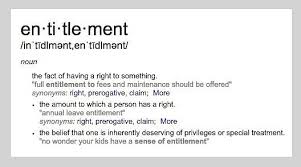
    The Church’s Entitlement Crisis

    “Be devoted to one another in brotherly love; give preference to one another in honor;” (Romans 12:10, NASB95)

    Politicians speak of the looming “Entitlement Crisis” regarding how to pay for Social Security and Medicare. Never mind that their own legislation and spending has helped to create said crisis! However, that is another subject. As a church leader for over thirty leaders now, I am becoming more convinced that the American church has an entitlement crisis of its own. That entitlement crisis is already here.

    What am I talking about? I am talking about my belief that so many established churches in America have a culture of entitlement and, in some cases, they make decisions that perpetuate that culture of entitlement. Pastors are pressured to cater to those who feel so entitled. Here are few examples….

    “Pastor, the majority of the church is people our age, so you should do what keeps the majority of the church happy.” TRANSLATION: We are ENTITLED to run the church and all decisions should cater to us.

    “Pastor, several people in the church are not happy with a certain line item in the budget, so they have stopped giving.” TRANSLATION: We are ENTITLED to agree with every line item in the budget.

    “Pastor, it’s great that we have all these new members, but you need to consider the legitimate, established members of the church.” TRANSLATION: We are ENTITLED to always occupy the positions of influence in the church.

    “Pastor, you talk about reaching new people, but our church should focus on the people we have.” TRANSLATION: We are ENTITLED to never have to change anything in order to reach anyone new.

    Do you see how easily an entitlement mentality can infect a church? The conversations in far too many churches today tend to be very much like I described above. Precious little (if any) conversation about making disciples, fulfilling the Great Commission, and actually doing what Jesus said the church is supposed to do. The pastor and staff are not viewed as those who are to lead the church to fulfill its mission. Instead, the pastor and staff are viewed as chaplains and hirelings who are there to be on call for crises, bury the dead, and otherwise do the bidding of certain groups. Missions? Churches with entitlement mentality pride themselves on being “mission-minded” because they give a bunch of money to missions each year and send teams on mission trips far from home – both Biblical and admirable things to do. However, such an emphasis on being “mission-minded” often camouflages the desire for everything to remain the same and the same people control their church at home. We are all for “over there” but woe be to anyone who suggests we change anything “right here.” This “entitlement mentality” is absolutely killing churches every day.

    To be fair, some pastors and staff members can fall into a similar entitlement mentality too. No pastor or staff member is entitled to their salary. It is the Lord’s provision for him and is to be intertwined with godly character, hard work, and faithful leadership. No pastor is entitled to be free of questions or criticism. No staff member is entitled to do their ministry the same way in perpetuity. When it comes to entitlement, pastors and staff members need to look in the mirror too. The entitlement mentality can seep into the church offices just as quickly as it comes into the pews.

    So, aren’t we entitled to anything as a church member? As I read scripture, I believe that every church is entitled to one thing….

    As a church member, I AM ENTITLED to Godly, faithful leadership in keeping with the scriptural standards for pastors/elders and deacons. This includes personal integrity, doctrinal integrity, and financial integrity. Every church member is entitled to leadership like that.

    However, Godly, faithful leadership in keeping with scriptural standards will not mean that everyone will be happy. It will not mean no one leaves the church. It will not mean your Sunday School class will never be asked to move or that you will never be asked to sacrifice in some other way. In fact, Godly, faithful leadership will often mean the church is led to change and sacrifice.

    An entitlement mentality will eventually KILL a church. Why? The spirit of sacrifice for the mission is replaced by a spirit of entitlement. The entitlement mentality means the focus turns inward more each year. Fewer and fewer people are reached. Fewer and fewer disciples are made. Nothing changes. Soon, NO ONE is reached and that reality is rationalized away because those in charge have the main goal of maintaining the status quo. Everyone is happy about things the way they are. Until no one is left to be happy about it any longer.

    Each of us must fight the entitlement virus in our own hearts. In fact, scripture says fighting entitlement is part of faithful Christian growth and not being conformed to the world. Really? The verse quoted at the top of this post actually comes as part of an extended section about faithful Christian living. Read this verse in its context and ask the Lord to speak to you.

    “Therefore I urge you, brethren, by the mercies of God, to present your bodies a living and holy sacrifice, acceptable to God, which is your spiritual service of worship. And do not be conformed to this world, but be transformed by the renewing of your mind, so that you may prove what the will of God is, that which is good and acceptable and perfect. For through the grace given to me I say to everyone among you not to think more highly of himself than he ought to think; but to think so as to have sound judgment, as God has allotted to each a measure of faith. For just as we have many members in one body and all the members do not have the same function, so we, who are many, are one body in Christ, and individually members one of another. Since we have gifts that differ according to the grace given to us, each of us is to exercise them accordingly: if prophecy, according to the proportion of his faith; if service, in his serving; or he who teaches, in his teaching; or he who exhorts, in his exhortation; he who gives, with liberality; he who leads, with diligence; he who shows mercy, with cheerfulness. Let love be without hypocrisy. Abhor what is evil; cling to what is good. Be devoted to one another in brotherly love; give preference to one another in honor; not lagging behind in diligence, fervent in spirit, serving the Lord; rejoicing in hope, persevering in tribulation, devoted to prayer, contributing to the needs of the saints, practicing hospitality.” (Romans 12:1–13, NASB95)